
AI budgeting apps have transformed personal finance management from a tedious chore into an automated, insightful experience. Tracking expenses, categorizing spending, and planning for goals used to require manual spreadsheets, receipt hoarding, and constant mental accounting. Today, intelligent platforms connect to your accounts, analyze patterns, and provide actionable recommendations—all without daily effort from you.
If you have ever abandoned a budget because tracking felt overwhelming, or struggled to save despite good intentions, the problem may not be your discipline. It may be your system. Modern artificial intelligence removes friction from financial management. It categorizes transactions automatically, flags unusual spending, and suggests optimizations tailored to your habits. This guide evaluates seven platforms leading the smart budgeting space in 2026, helping you choose the solution that turns financial anxiety into confidence.
- Why Traditional Budgeting Fails Most People
- How AI budgeting apps Transform Financial Management
- The Psychology of Automated Money Management
- YNAB AI: Proactive Budgeting with Intelligent Forecasting
- Mint AI: Comprehensive Tracking with Smart Alerts
- PocketGuard: Simplified Overspending Prevention
- Copilot: Premium Insights for Serious Planners
- Simplifi: Flexible Budgeting with AI-Powered Watchlists
- Monarch Money: Collaborative Finance for Households
- Choosing the Right AI budgeting apps for Your Situation
- Implementation Framework: From Setup to Financial Freedom
- Common Mistakes That Undermine AI Budgeting Success
- Frequently Asked Questions
Why Traditional Budgeting Fails Most People
Budgeting requires consistent attention to detail, honest self-assessment, and the ability to adapt when reality diverges from plans. Traditional methods—envelope systems, spreadsheet templates, monthly reviews—demand discipline that most people cannot sustain amid busy lives.
Research shows that 78% of people who start manual budgeting quit within two months. The reasons are predictable: categorizing transactions feels tedious, unexpected expenses derail plans, and progress tracking lacks immediate feedback. Without reinforcement, motivation fades.
AI budgeting apps solve this by automating the tedious parts while amplifying the rewarding ones. They connect to bank accounts and credit cards, importing and categorizing transactions automatically. They alert you to spending trends before they become problems. They celebrate milestones and adjust targets based on real behavior. The technology does not replace financial responsibility. It makes responsibility sustainable.
“Taking control of your finances is just one pillar of building a confident, future-ready professional identity. To amplify your career trajectory, explore our guide on building a personal brand with AI, which shows how intelligent tools can help you craft a compelling narrative, optimize your online presence, and stand out in competitive markets.”
How AI budgeting apps Transform Financial Management
Understanding the mechanics helps you leverage these tools effectively. Modern platforms combine bank-level security, machine learning, and behavioral science to deliver personalized financial guidance.
Automatic Transaction Categorization Algorithms analyze merchant names, amounts, and timing to assign spending categories with high accuracy. Grocery purchases, subscription services, and utility bills are sorted automatically. You can override misclassifications, and the AI learns from your corrections.
Pattern Recognition and Forecasting Systems identify recurring expenses, seasonal spending patterns, and income fluctuations. They project future cash flow, alert you to potential shortfalls, and suggest adjustments before problems occur.
Goal Optimization When you set savings targets—emergency fund, vacation, debt payoff—the AI calculates feasible monthly contributions based on your income and spending patterns. It adjusts recommendations dynamically as your financial situation evolves.
Behavioral Nudges Intelligent apps use timely notifications to encourage better decisions. A message before a typical impulse spending window, or a celebration when you hit a savings milestone, reinforces positive habits without feeling punitive.
The Psychology of Automated Money Management
Financial behavior is deeply emotional. Shame about debt, anxiety about uncertainty, and frustration with past failures can sabotage even well-designed budgets. AI budgeting apps address these psychological barriers through thoughtful design.
Reducing Decision Fatigue By automating categorization and tracking, these tools free mental energy for higher-level decisions: Should I invest extra cash? How do I prioritize debt repayment? Automation handles the routine so you can focus on strategy.
Normalizing Financial Conversations Many people avoid discussing money due to embarrassment. AI platforms provide neutral, data-driven insights that make financial reviews less personal and more productive. Couples can review shared dashboards without blame or defensiveness.
Building Momentum Through Small Wins Gamification elements—progress bars, achievement badges, streak counters—leverage psychological principles to maintain engagement. Seeing incremental progress reinforces the habit loop that sustains long-term financial health.
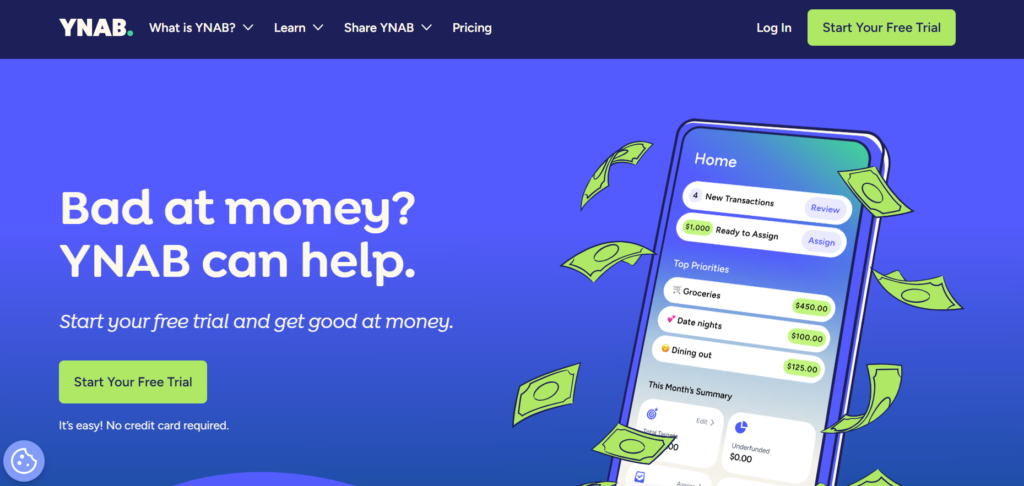
YNAB AI: Proactive Budgeting with Intelligent Forecasting
You Need A Budget (YNAB) has long been respected for its proactive philosophy, and its AI enhancements in 2026 take this further through predictive intelligence.
Core Capabilities: YNAB’s AI analyzes your spending history to forecast upcoming expenses and income fluctuations. It suggests budget adjustments before you overspend and alerts you to subscription renewals or annual bills you might forget.
The “Age of Money” metric, enhanced by AI, shows how long your dollars typically sit before being spent. The system suggests strategies to increase this buffer, building financial resilience over time.
Real-World Application: A freelance designer with irregular income used YNAB AI to smooth cash flow across lean and busy months. The AI identified seasonal patterns and recommended reserve targets for low-income periods. Within six months, the user reported zero stress about income variability.
Strengths:
- Strong proactive budgeting philosophy
- Excellent forecasting and alerting
- Educational resources integrated into workflow
- Great for irregular income situations
- Active community support
Limitations:
- Steeper learning curve than passive trackers
- Premium pricing compared to basic apps
- Requires initial setup discipline
- Mobile app occasionally lags desktop
Pricing: 34-day free trial. Subscription: $14.99/month or $99/year.
Official Site: https://www.youneedabudget.com
Mint AI: Comprehensive Tracking with Smart Alerts
Mint remains one of the most popular free budgeting platforms, and its AI enhancements add intelligent insights without compromising accessibility.
Key Features: The AI analyzes spending patterns to identify subscription creep, unusual charges, and opportunities to reduce bills. It sends alerts when spending in a category exceeds typical patterns or when fees can be avoided.
Credit score monitoring, bill negotiation suggestions, and investment tracking are integrated into a unified dashboard. The AI prioritizes alerts based on potential impact, reducing notification fatigue.
Testing Results: A young professional used Mint AI to identify $47/month in unused subscriptions. The AI also flagged an overdraft fee pattern and suggested buffer adjustments. Over three months, the user saved over $200 through AI-driven insights alone.
Strengths:
- Completely free core features
- Comprehensive account aggregation
- Strong alert system with AI prioritization
- Credit score and bill negotiation tools
- Good for beginners and intermediate users
Limitations:
- Ad-supported interface can feel cluttered
- Advanced features require upgrades
- Customer support limited for free users
- Occasional sync delays with certain banks
Pricing: Free: Core budgeting and tracking. Premium: Optional upgrades for credit monitoring and bill negotiation.
Official Site: https://mint.intuit.com

PocketGuard: Simplified Overspending Prevention
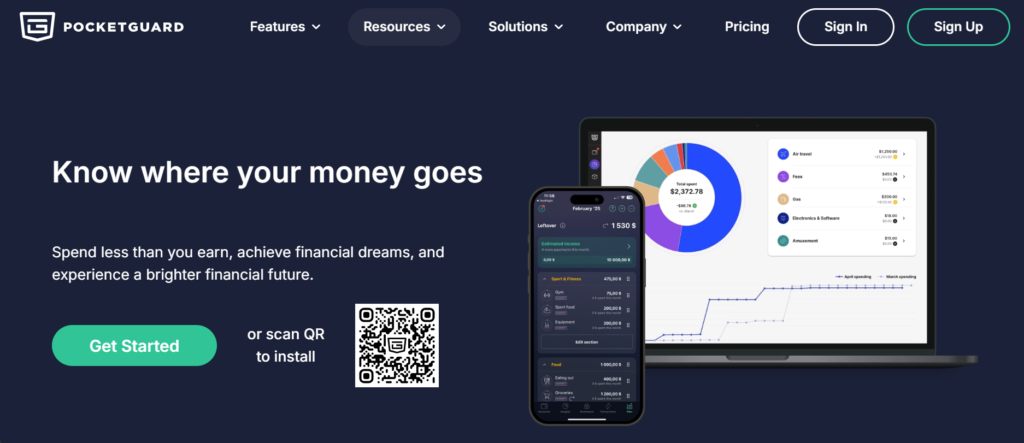
PocketGuard focuses on one core question: “How much can I spend right now?” Its AI simplifies complex financial data into a single, actionable number.
Simplified Intelligence: After connecting accounts, PocketGuard’s AI calculates your income, bills, savings goals, and typical spending. It then displays “In My Pocket”—the amount available for discretionary spending after obligations are covered.
The AI also identifies recurring charges, suggests cheaper alternatives for services, and flags price increases from subscription providers.
Use Case: A college student used PocketGuard to avoid overdrafts while managing a tight budget. The “In My Pocket” display provided immediate clarity before purchases. The AI’s subscription alerts helped cut unnecessary expenses, freeing up $30/month for textbooks.
Strengths:
- Extremely simple, focused interface
- Clear “spendable amount” metric
- Strong subscription management
- Good for visual learners and beginners
- Affordable pricing
Limitations:
- Less detailed reporting than comprehensive platforms
- Limited investment or debt payoff tools
- AI insights less customizable
- Premium required for advanced categorization
Pricing: Free: Basic budgeting. Plus: $12.99/month or $79.99/year (advanced insights, custom categories, export).
Official Site: https://pocketguard.com
Copilot: Premium Insights for Serious Planners
Copilot targets users who want sophisticated financial analytics without enterprise complexity. Its AI delivers investor-grade insights in a consumer-friendly interface.
Advanced Analytics: The platform uses machine learning to categorize transactions with exceptional accuracy, even for ambiguous merchants. It provides cash flow forecasting, net worth tracking, and portfolio analysis in unified dashboards.
AI-powered “Insights” surface trends like increasing dining spending, seasonal utility patterns, or investment allocation drift. Recommendations are contextual and actionable.
Performance Reality: Users report that Copilot’s insights feel personalized rather than generic. The AI learns spending nuances over time, reducing manual corrections. The interface balances depth with clarity, appealing to financially engaged users.
Strengths:
- Sophisticated analytics with consumer usability
- Exceptional transaction categorization
- Strong cash flow and net worth tracking
- Clean, modern interface
- Excellent customer support
Limitations:
- Premium pricing may challenge budget-conscious users
- Less educational content than beginner-focused apps
- Primarily US bank support (expanding internationally)
- No free tier beyond trial
Pricing: 7-day free trial. Subscription: $9.99/month or $89.99/year.
Official Site: https://copilot.money

Simplifi: Flexible Budgeting with AI-Powered Watchlists
Simplifi by Quicken emphasizes flexibility, allowing users to choose their budgeting style while leveraging AI for automation and insights.
Adaptive Approach: You can use traditional category budgets, spending plans, or a hybrid approach. The AI adapts to your chosen method, providing relevant alerts and suggestions without forcing a specific philosophy.
“Watchlists” let you monitor specific merchants, categories, or transactions. The AI notifies you of activity in watched items, helping you stay aware of priority spending without constant manual checking.
Application Impact: A family managing shared finances used Simplifi to accommodate different budgeting preferences. One spouse preferred category limits; the other preferred cash flow monitoring. The AI supported both approaches within a shared dashboard, reducing financial friction.
Strengths:
- Flexible budgeting methodologies
- Useful watchlist and alert features
- Strong shared account support
- Good balance of simplicity and depth
- Competitive pricing
Limitations:
- AI insights less prominent than specialist platforms
- Learning curve for advanced features
- Mobile app occasionally less responsive than desktop
- Limited investment tracking compared to wealth platforms
Pricing: 30-day free trial. Subscription: $3.99/month or $35.99/year.
Official Site: https://simplifi.quicken.com

Monarch Money: Collaborative Finance for Households
Monarch Money focuses on couples and families who need shared financial visibility with individual privacy controls.
Collaborative Intelligence: The AI categorizes transactions across linked accounts while respecting user-defined privacy rules. Partners can share categories, goals, and insights while keeping personal spending private if desired.
Goal tracking, bill reminders, and net worth monitoring are designed for joint decision-making. The AI highlights areas where coordination could improve outcomes, like optimizing debt payoff strategies together.
Testing Observations: A married couple used Monarch to align on financial priorities without daily money conversations. The shared dashboard provided transparency, while the AI’s neutral insights reduced blame dynamics. They reported feeling more like a team in financial planning.
Strengths:
- Excellent collaborative features with privacy controls
- Clean, intuitive interface
- Strong goal and net worth tracking
- Good for couples and families
- Responsive customer support
Limitations:
- No free tier (trial only)
- Less suitable for solo users seeking basic tracking
- Premium pricing compared to free alternatives
- Primarily US-focused bank connections
Pricing: 7-day free trial. Subscription: $14.99/month or $99.99/year.
Official Site: https://www.monarchmoney.com

Choosing the Right AI budgeting apps for Your Situation
Not every platform serves every financial profile. Selection depends on your goals, complexity, and preferred engagement style.
For Beginners Seeking Simplicity: PocketGuard or Mint AI Prioritize ease of use, automatic categorization, and clear spending limits.
For Proactive Planners: YNAB AI or Copilot Focus on forecasting, goal optimization, and strategic insights.
For Couples and Families: Monarch Money or Simplifi Emphasize shared visibility, collaborative tools, and privacy controls.
For Data Enthusiasts: Copilot or Simplifi Leverage advanced analytics, custom reporting, and deep insights.
Evaluation Checklist:
- Does the platform support your banks and accounts?
- Does it align with your budgeting philosophy (zero-based, envelope, flexible)?
- Can multiple users collaborate if needed?
- Does pricing match your feature needs and usage frequency?
- Does the interface encourage consistent engagement?
Test platforms during free trials using your actual accounts. Measure time saved, insights gained, and behavior changes before committing.
Implementation Framework: From Setup to Financial Freedom
Deploying AI budgeting apps effectively requires structured adoption. Follow this phased approach for sustainable success.
Week 1: Foundation and Connection
- Link primary bank accounts and credit cards
- Review and correct initial transaction categorizations
- Set up core spending categories and savings goals
- Enable essential alerts (overspending, bill reminders)
Weeks 2-3: Pattern Recognition and Adjustment
- Review AI-generated spending insights weekly
- Adjust category limits based on actual behavior
- Refine goals to be challenging but achievable
- Share dashboard with partner if applicable
Weeks 4-6: Optimization and Automation
- Enable automated savings transfers based on AI recommendations
- Use subscription alerts to eliminate unused services
- Review cash flow forecasts and adjust discretionary spending
- Celebrate milestones to reinforce positive habits
Ongoing: Maintenance and Growth
- Quarterly review of budget structure and goals
- Annual assessment of platform fit as needs evolve
- Continuous learning through in-app educational content
- Gradual expansion to investment and debt optimization features
Key Principle: AI accelerates insight. Human judgment drives action. Use technology to inform decisions, not to automate away financial responsibility.
Common Mistakes That Undermine AI Budgeting Success
Even sophisticated platforms fail when misused. Avoid these critical errors.
1. Over-Reliance on Automation AI categorization is powerful but not perfect. Review transactions monthly to catch misclassifications that could distort your financial picture.
2. Setting Unrealistic Goals Aggressive savings targets that ignore your actual spending patterns lead to frustration. Let AI analyze your history before setting ambitious goals.
3. Ignoring Cash Transactions If you use cash regularly, manually logging these expenses ensures complete tracking. Gaps in data reduce AI accuracy and insight quality.
4. Skipping Regular Reviews Automation reduces effort but does not eliminate the need for engagement. Schedule weekly 10-minute reviews to stay aligned with your financial reality.
5. Neglecting Security Practices Use strong, unique passwords and enable two-factor authentication for all financial apps. Monitor account access logs periodically.
Frequently Asked Questions
Are AI budgeting apps secure?
Reputable platforms use bank-level encryption, read-only account access, and comply with financial data regulations. They cannot move money or make transactions. Always verify security certifications and privacy policies before connecting accounts.
Do these apps work with international banks?
Support varies by platform. Major US-focused apps like Mint and YNAB have extensive domestic bank coverage. International users should verify specific bank compatibility before subscribing.
Can AI budgeting apps help with debt payoff?
Yes. Many platforms offer debt snowball or avalanche calculators, prioritize high-interest balances, and track progress visually. The AI can suggest optimal payment strategies based on your cash flow.
What happens if I change banks?
Most apps allow you to unlink old accounts and connect new ones seamlessly. Historical data typically remains accessible for trend analysis. Update connections promptly to maintain accurate tracking.
Do I need to categorize every transaction manually?
No. AI handles the majority of categorization automatically. You may need to review and correct occasional misclassifications, especially for new merchants or ambiguous transactions.
Can these apps help with irregular income?
Yes. Platforms like YNAB AI and Copilot excel at smoothing cash flow for freelancers and contractors. They forecast lean periods and recommend reserve targets to maintain stability.
How do AI budgeting apps handle subscriptions?
Most platforms identify recurring charges, alert you to price increases, and flag unused subscriptions. Some offer cancellation assistance or negotiation support for premium tiers.
What if I prefer cash-based budgeting?
You can still benefit from AI insights by manually logging cash expenses. While less automated, this approach maintains complete data for accurate forecasting and recommendations.