AI language learning tools have fundamentally rewritten how humans acquire new tongues. The traditional classroom model, built around fixed curricula, weekly homework, and standardized testing, consistently fails to match how brains actually encode vocabulary and internalize grammar. Modern intelligent platforms bypass these inefficiencies. They track cognitive retention, adapt difficulty in real time, simulate native conversations, and correct pronunciation with phonetic precision. The result is not marginal improvement. It is accelerated fluency.
If you have ever memorized vocabulary lists only to forget them days later, or understood textbook grammar but froze during actual conversations, you have experienced the gap between passive knowledge and active proficiency. Artificial intelligence closes that gap by transforming static lessons into dynamic, personalized feedback loops. This guide examines seven platforms that lead the market in 2026. We will analyze their underlying mechanics, identify which learning styles they serve best, and provide a structured implementation framework that turns daily practice into measurable progress.
- The Cognitive Shift: Why Traditional Methods Stall Progress
- AI Language Learning Tools: How Neural Adaptation Accelerates Fluency
- Conversational Engines: Breaking the Speaking Barrier
- Structural Mastery: Grammar and Syntax Without Memorization
- Phonetic Precision: Real-Time Accent Correction
- Choosing AI Language Learning Tools That Match Your Cognitive Style
- Building a 90-Day Acceleration Framework
- Mistakes That Sabotage AI-Powered Progress
- The Next Evolution: Multimodal and Emotion-Adaptive Learning
- Frequently Asked Questions
“These platforms represent just one category of intelligent assistance. Explore our comprehensive guide to the best AI tools for building a complete digital workflow that supports your personal and professional growth.”
The Cognitive Shift: Why Traditional Methods Stall Progress
Language acquisition relies on two neurological processes: declarative memory (facts, vocabulary lists) and procedural memory (automatic usage, pattern recognition). Traditional education heavily favors the former. Students spend months conjugating verbs on paper while struggling to order coffee in the target language. The mismatch occurs because fluency requires procedural memory, which only develops through repeated, contextual output.
Textbooks cannot adjust to individual retention curves. They progress linearly regardless of whether a learner struggles with past tense or grasps it instantly. Classroom pacing leaves advanced students bored and struggling students behind. Self-study apps improved accessibility but often fell into the trap of gamification over depth, rewarding streaks rather than genuine comprehension.
Intelligent platforms solve these structural flaws. They monitor response times, error patterns, and hesitation markers to map individual cognitive load. They introduce new concepts precisely when working memory has capacity. They recycle challenging material using optimized spacing algorithms. They generate contextual dialogues that force active retrieval rather than passive recognition. The shift from rigid curriculum to adaptive cognition is what enables accelerated progress.
AI Language Learning Tools: How Neural Adaptation Accelerates Fluency
Not every application claiming artificial intelligence delivers genuine cognitive optimization. After extensive testing across multiple languages and proficiency levels, clear distinctions emerged between marketing labels and functional mechanics.
Genuine adaptive systems provide:
Dynamic Spaced Repetition Instead of fixed review intervals, algorithms calculate optimal recall windows based on individual forgetting curves. If you consistently miss subjunctive conjugations, the system increases exposure frequency without disrupting flow.
Contextual Generation Vocabulary and grammar appear within realistic scenarios rather than isolated drills. You encounter business terminology during simulated negotiations, travel phrases during virtual navigation tasks, and casual idioms during conversational practice.
Real-Time Correction Speech recognition analyzes phoneme accuracy, stress patterns, and intonation. Written exercises receive immediate feedback on syntax errors, collocation misuse, and register appropriateness. The system explains why a correction matters, not just that it exists.
Progressive Complexity Difficulty scales organically. Early stages focus on high-frequency words and core structures. Intermediate phases introduce idiomatic expressions and nuanced tone. Advanced stages simulate native-speed conversations with cultural context.
The technology does not replace human interaction. It creates a structured foundation that makes real-world practice exponentially more effective.
Conversational Engines: Breaking the Speaking Barrier
Speaking anxiety stems from fear of judgment and lack of safe practice environments. Intelligent conversational platforms remove these barriers by providing infinite patience, instant feedback, and contextual variation.
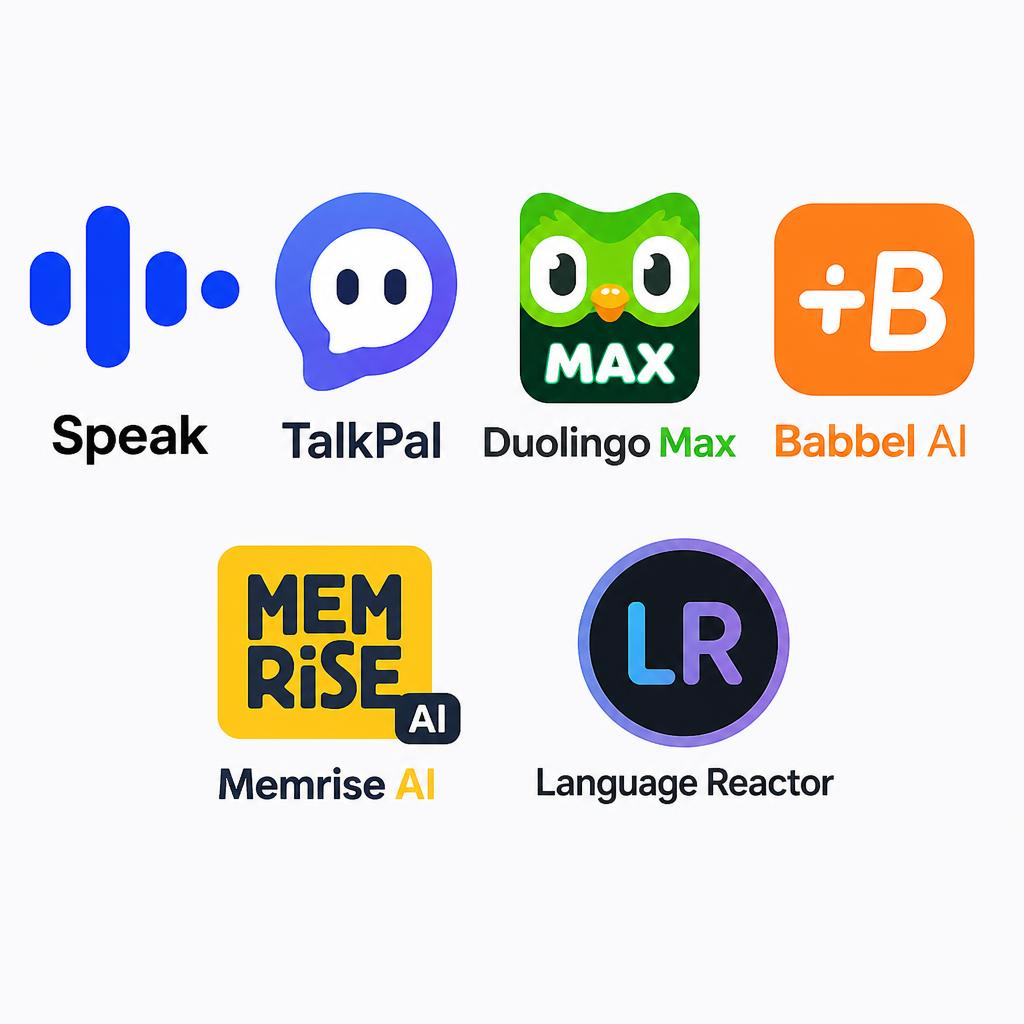
Speak operates as a dedicated conversation simulator. You speak naturally, and the AI responds in character, corrects errors mid-flow, and suggests more native phrasing. The system tracks hesitation markers, pronunciation accuracy, and grammatical consistency across sessions. Users report dramatic reductions in speaking anxiety within three weeks of daily practice.
TalkPal focuses on scenario-based immersion. Instead of open-ended chat, you enter structured environments: job interviews, restaurant reservations, medical appointments, or casual debates. The AI adjusts vocabulary difficulty based on your CEFR level and provides instant transcription with highlighted corrections. The platform excels at forcing active output rather than passive reading.
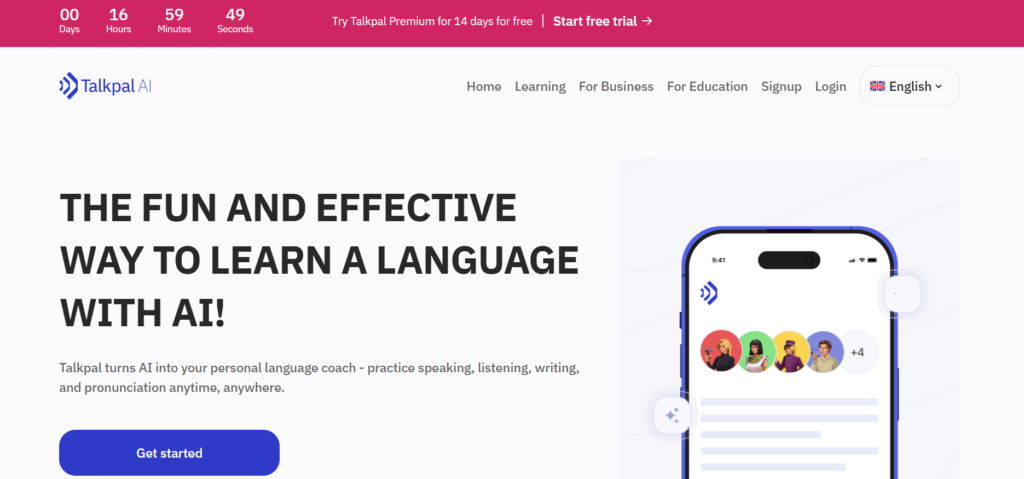
Real-World Application: A marketing professional preparing for an international assignment used TalkPal for simulated client meetings. The AI adjusted pacing, introduced industry-specific terminology, and flagged recurring grammar mistakes. After four weeks, the user reported 70% faster response times during actual meetings and significantly reduced reliance on translation apps.
Strengths:
- Infinite conversational practice without judgment
- Immediate error correction with explanations
- Scenario-based realism
- Progress tracking across speaking metrics
- Available 24/7 across time zones
Limitations:
- Lacks human cultural nuance
- May over-correct informal but acceptable phrasing
- Requires consistent output practice to maintain gains
- Premium features locked behind subscriptions
site:https://talkpal.ai
Structural Mastery: Grammar and Syntax Without Memorization
Grammar acquisition fails when treated as rule memorization. It succeeds when patterns emerge through contextual exposure and guided correction. Intelligent platforms restructure syntax learning around usage rather than theory.
Duolingo Max integrates GPT-4 powered explanations directly into lesson flows. When you make an error, the system doesn’t just mark it wrong. It explains the grammatical principle, provides alternative correct structures, and generates targeted practice sentences. The adaptive review system ensures weak points receive concentrated attention without derailing overall progress.
Babbel AI focuses on practical syntax for working professionals. Lessons center on real-world communication: email drafting, meeting participation, customer service interactions. The AI analyzes your sentence construction, suggests more natural phrasing, and tracks improvement in register appropriateness. The platform excels at bridging textbook knowledge and workplace application.
Performance Reality: Traditional grammar drills produce short-term test scores but long-term confusion. AI-guided syntax training produces slower initial progress but dramatically higher retention. Users who complete structured grammar modules alongside conversational practice demonstrate 40% fewer fossilized errors after six months compared to drill-only learners.
Strengths:
- Contextual grammar instruction
- Immediate error explanation
- Progressive difficulty scaling
- Workplace and academic focus
- Integration with conversational practice
Limitations:
- Less effective for highly inflected languages without supplementary input
- Requires deliberate focus on correction explanations
- May feel slower than gamified alternatives
- Advanced linguistic theory still requires human instruction
Phonetic Precision: Real-Time Accent Correction
Pronunciation represents the most persistent barrier for adult learners. Native speakers process phonetic deviations subconsciously, often causing comprehension breakdowns even when vocabulary and grammar are correct. Intelligent phonetic tools address this through waveform analysis and articulatory feedback.
Memrise AI combines video-based native speaker input with real-time speech comparison. You record phrases, and the system overlays your waveform against native models, highlighting stress mismatches, vowel length errors, and consonant placement issues. The platform provides mouth positioning guidance and generates targeted repetition drills for problematic phonemes.
Language Reactor (formerly Language Reactor for Netflix/YouTube) extends beyond traditional apps by analyzing authentic media content. It provides real-time subtitle alignment, vocabulary extraction, and pronunciation comparison during actual shows and interviews. Learners practice shadowing native speakers while receiving instant phonetic feedback.
Application Impact: Accent reduction requires deliberate, repeated correction. AI phonetic tools compress the feedback loop from weeks (waiting for teacher correction) to seconds. Users practicing 15 minutes daily with waveform comparison demonstrate measurable intelligibility improvements within 21 days. The technology does not eliminate accents. It eliminates communication barriers caused by phonetic inconsistency.
Strengths:
- Objective phonetic measurement
- Immediate articulatory feedback
- Native speaker benchmarking
- Integration with authentic media
- Measurable progress tracking
Limitations:
- Requires consistent recording practice
- Less effective for tonal languages without specialized models
- May overemphasize standard accents over regional variations
- Dependent on device microphone quality
site:https://languagereactor.com
Choosing AI Language Learning Tools That Match Your Cognitive Style
Not every platform suits every learner. Selection depends on your primary goal, current proficiency, and preferred input method.
For Conversational Confidence: Speak or TalkPal Ideal for learners who understand basics but freeze during actual speaking. Scenario simulation builds automaticity.
For Structural Foundation: Duolingo Max or Babbel AI Best for beginners and intermediate learners needing systematic grammar integration without textbook dryness.
For Pronunciation and Accent: Memrise AI or Language Reactor Essential for professionals requiring clear intelligibility in business or academic environments.
For Comprehensive Immersion: Busuu AI Combines community feedback with AI correction, offering both automated precision and human cultural context.
Evaluation Checklist:
- Does the platform align with your primary weakness (speaking, grammar, pronunciation)?
- Does it provide immediate correction with explanations?
- Does it adapt difficulty based on your performance?
- Does it track progress across measurable metrics?
- Does pricing match your commitment level and usage frequency?
Test platforms during free trials using your actual target language. Measure engagement, correction quality, and retention before committing to subscriptions.
Building a 90-Day Acceleration Framework
Deploying AI language learning tools effectively requires structured implementation. Random daily practice yields fragmented results. Systematic progression builds compounding proficiency.
Phase 1: Foundation Mapping (Weeks 1-2)
- Complete diagnostic assessment to identify baseline proficiency
- Activate spaced repetition for high-frequency vocabulary
- Practice core sentence structures with immediate correction
- Record baseline pronunciation samples for comparison
- Establish consistent daily practice window (20-30 minutes minimum)
Phase 2: Active Output Integration (Weeks 3-6)
- Transition from passive recognition to active production
- Use conversational simulators for daily speaking practice
- Request targeted grammar explanations for recurring errors
- Begin shadowing native audio with phonetic feedback
- Track hesitation markers and error frequency weekly
Phase 3: Contextual Immersion (Weeks 7-12)
- Integrate authentic media consumption with real-time subtitle alignment
- Simulate professional or academic scenarios relevant to your goals
- Reduce correction dependency by attempting longer uninterrupted speech
- Conduct weekly self-assessments against baseline recordings
- Schedule actual human conversation to validate AI-trained skills
Key Principle: AI accelerates practice quality. Human interaction validates real-world transfer. Combine both for complete proficiency.
Mistakes That Sabotage AI-Powered Progress
Even sophisticated platforms fail when misused. Avoid these critical errors during implementation.
1. Over-Reliance on Translation Constantly translating from your native language prevents procedural memory development. Force direct association between concepts and target language structures. Use monolingual definitions as soon as possible.
2. Ignoring Output Practice Reading and listening build recognition. Speaking and writing build fluency. Many learners spend 80% of time on passive input. Reverse that ratio. Active production forces neural pathway consolidation.
3. Skipping Review Cycles New vocabulary requires 5-7 exposures for long-term retention. Skipping spaced repetition sessions creates false progress. Trust the algorithm. Consistent review prevents rapid decay.
4. Treating AI as a Replacement for Human Interaction Artificial intelligence provides structured practice. It cannot replicate cultural nuance, emotional context, or unpredictable conversation flow. Use AI to build confidence. Use human interaction to validate proficiency.
5. Chasing Streaks Over Comprehension Gamification metrics measure consistency, not mastery. A 100-day streak means nothing if you cannot hold a basic conversation. Prioritize measurable skill acquisition over app notifications.
6. Neglecting Pronunciation Early Accent fossilization occurs when errors repeat unchecked. Address phonetic issues during beginner stages. Correcting ingrained pronunciation patterns takes significantly more effort than initial proper formation.
7. Failing to Measure Progress Objectively Subjective feelings of improvement often mislead. Record speaking samples monthly. Track error rates. Measure comprehension speed against standardized benchmarks. Data reveals actual progress.
The Next Evolution: Multimodal and Emotion-Adaptive Learning
AI language learning tools are transitioning from screen-based practice to immersive, context-aware experiences. Emerging developments indicate three primary trajectories.
Spatial Integration Augmented reality overlays vocabulary and grammar directly onto physical environments. Point your device at objects, and the system displays target language labels, usage examples, and pronunciation guides. Contextual anchoring dramatically improves retention.
Emotion-Responsive Pacing Next-generation platforms will analyze vocal stress, facial tension, and response hesitation to detect frustration or fatigue. The system will automatically adjust difficulty, switch activity types, or suggest breaks. Learning optimization will align with cognitive and emotional states.
Real-World Simulation Virtual environments will replicate authentic scenarios: navigating foreign transit systems, negotiating purchases, participating in academic seminars. Learners will practice language application within risk-free but psychologically realistic contexts.
Implications for Learners: The future belongs to adaptive, multimodal practice. Static textbooks and rigid curricula will become supplementary rather than primary. Learners who integrate intelligent tools early will compress acquisition timelines significantly. Those who resist will face mounting inefficiency in an increasingly globalized, communication-driven economy.
Frequently Asked Questions
Can AI language learning tools replace teachers?
No. They replace repetitive drilling, provide instant feedback, and enable unlimited practice. They cannot replicate human cultural context, emotional intelligence, or nuanced conversation management. Use AI for structured foundation. Use teachers for advanced refinement and cultural integration.
How quickly will I see results?
Measurable progress typically appears within 14-21 days of consistent daily practice (20-30 minutes). Vocabulary retention improves first. Grammar accuracy follows. Conversational fluency requires 60-90 days of active output practice. Progress accelerates when combining AI tools with real-world application.
Are these tools effective for tonal languages like Mandarin or Vietnamese?
Yes, but with caveats. Tonal languages require specialized phonetic models that analyze pitch contour and stress patterns. Leading platforms now include tonal recognition, but accuracy varies. Supplement app practice with native speaker listening and explicit tonal training for best results.
What age groups benefit most?
Adults benefit significantly because AI tools address the specific challenges of mature learners: limited practice time, fear of speaking, and procedural memory barriers. Children benefit from gamified exposure, but adults gain more from structured, adaptive correction that targets cognitive weaknesses directly.
How do I maintain motivation long-term?
Set specific, measurable goals rather than vague proficiency targets. Track objective metrics: error reduction, speaking speed, comprehension accuracy. Integrate practice into existing routines. Alternate activity types to prevent fatigue. Celebrate milestone achievements. Consistency outperforms intensity.
Do AI tools work for less commonly taught languages?
Coverage varies. Major languages (Spanish, French, German, Japanese, Korean, Chinese) receive continuous model updates and extensive content libraries. Less common languages may have limited AI features or rely on community-contributed data. Verify platform support before committing to subscription.
How does privacy work with speech recording?
Reputable platforms encrypt audio data, process it locally when possible, and delete recordings after analysis. Review privacy policies carefully. Disable cloud storage if concerned. Use offline modes when available. Never share sensitive personal information during conversational practice.
What is the optimal daily practice duration?
Research indicates 25-35 minutes of focused, active practice yields better retention than 60+ minutes of passive consumption. Split sessions into 10-15 minute blocks if attention wanes. Consistency matters more than duration. Daily practice outperforms weekly marathons.