
AI legal document generators have transformed how businesses, freelancers, and individuals handle contractual agreements. Drafting legally sound documents used to require expensive attorney consultations, template hunting, and hours of customization. Today, intelligent platforms analyze your specific situation, jurisdiction, and requirements to generate tailored contracts in minutes.
If you have ever delayed a business deal because contract preparation felt overwhelming, or worried that a generic template might miss critical protections, you understand the friction traditional legal drafting creates. Modern artificial intelligence removes that friction. It ensures compliance with local regulations, flags risky clauses, and adapts language to your exact context. This guide examines seven platforms leading the legal automation space in 2026, helping you choose the solution that balances speed with legal reliability.
- Why Legal Documentation Slows Down Business
- How AI legal document generators Ensure Compliance and Clarity
- The Risk of Generic Templates Versus Intelligent Customization
- LawDepot: Broad Coverage for Personal and Business Needs
- Rocket Lawyer: Attorney Review with AI Drafting
- LegalZoom AI: Comprehensive Legal Services Platform
- DocuSign CLM: Enterprise Contract Lifecycle Management
- Ironclad: AI-Powered Negotiation and Workflow Automation
- Selecting the Right AI legal document generators for Your Context
- Validation Steps Before Signing Any AI-Generated Document
- Common Errors That Compromise Legal Protection
- Frequently Asked Questions
Why Legal Documentation Slows Down Business
Contracts, agreements, and legal forms represent necessary friction in commerce. They protect parties, clarify expectations, and provide recourse when things go wrong. But the process of creating them often becomes a bottleneck.
Small business owners juggle operations, marketing, and customer service. Adding legal drafting to that mix stretches capacity thin. Freelancers need client agreements but cannot justify $300/hour attorney fees for routine contracts. Startups moving fast risk overlooking critical clauses in pursuit of speed.
AI legal document generators address this tension by automating the repetitive aspects of legal drafting while preserving substantive protection. They do not replace attorneys for complex matters. They handle routine documentation efficiently, freeing legal professionals to focus on high-stakes strategy and negotiation.
“Maintaining healthy eating habits while traveling presents unique challenges. Our guide on AI meal planning apps shows you how to find nutritious options on the go, accommodate dietary restrictions at restaurants, and balance indulgence with wellness during your trips.”
How AI legal document generators Ensure Compliance and Clarity
Understanding the mechanics builds confidence in using these tools responsibly. Modern platforms combine legal expertise with machine learning to generate reliable documents.
Jurisdiction Awareness Algorithms identify your location and applicable laws, then adapt language accordingly. A non-compete clause valid in Texas may be unenforceable in California; the AI adjusts or flags this automatically.
Contextual Customization Rather than filling blanks in static templates, intelligent systems ask targeted questions about your situation. They incorporate your answers into coherent, logically structured documents that reflect your actual needs.
Risk Detection Advanced platforms analyze drafted clauses for ambiguity, unenforceability, or unintended consequences. They suggest clearer alternatives and explain the rationale behind recommendations.
Version Control and Collaboration Smart systems track changes, manage approvals, and maintain audit trails. Multiple stakeholders can review and comment without creating conflicting document versions.
The Risk of Generic Templates Versus Intelligent Customization
Free template libraries abound online. They seem convenient but carry hidden risks. Generic language may not address your specific scenario. Outdated clauses may reference repealed laws. Ambiguous phrasing may create loopholes.
AI legal document generators mitigate these risks through dynamic adaptation. They pull from updated legal databases, apply jurisdiction-specific rules, and tailor language to your documented intentions. The output is not a one-size-fits-all form. It is a customized instrument designed for your context.
That said, AI is not infallible. Complex transactions, novel legal issues, and high-stakes agreements still require human attorney review. Use automation for routine matters. Escalate complexity to qualified professionals.
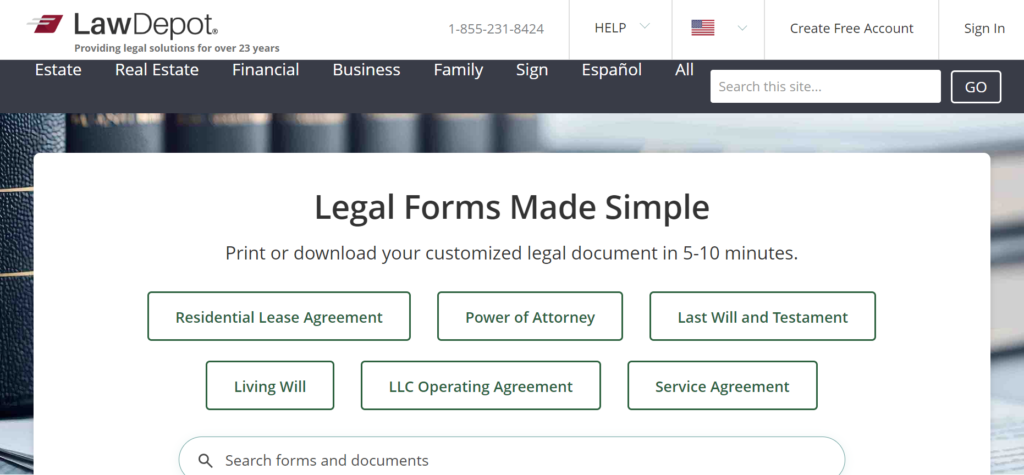
LawDepot: Broad Coverage for Personal and Business Needs
LawDepot offers one of the widest libraries of legal documents, generated through an intelligent questionnaire system.
Core Capabilities: You select a document type—rental agreement, independent contractor contract, privacy policy—and answer guided questions. The AI assembles your responses into a formatted, legally structured document. It flags missing information and suggests optional clauses based on your inputs.
The platform covers personal documents (wills, power of attorney) and business forms (NDAs, service agreements). Each document includes plain-language explanations of key terms.
Real-World Application: A landlord used LawDepot to generate a state-compliant lease agreement in 20 minutes. The AI included required disclosures, security deposit rules, and maintenance responsibilities specific to their jurisdiction. The tenant signed electronically, and both parties received executed copies instantly.
Strengths:
- Extensive document library (500+ templates)
- Jurisdiction-specific customization
- Plain-language explanations
- Electronic signature integration
- Affordable pricing
Limitations:
- Less suitable for highly complex or novel legal issues
- Attorney review requires additional fee
- Interface feels dated compared to newer platforms
- Limited collaboration features
Pricing: Free trial. Subscription: $39/month or $99/year for unlimited documents.
Official Site: https://www.lawdepot.com
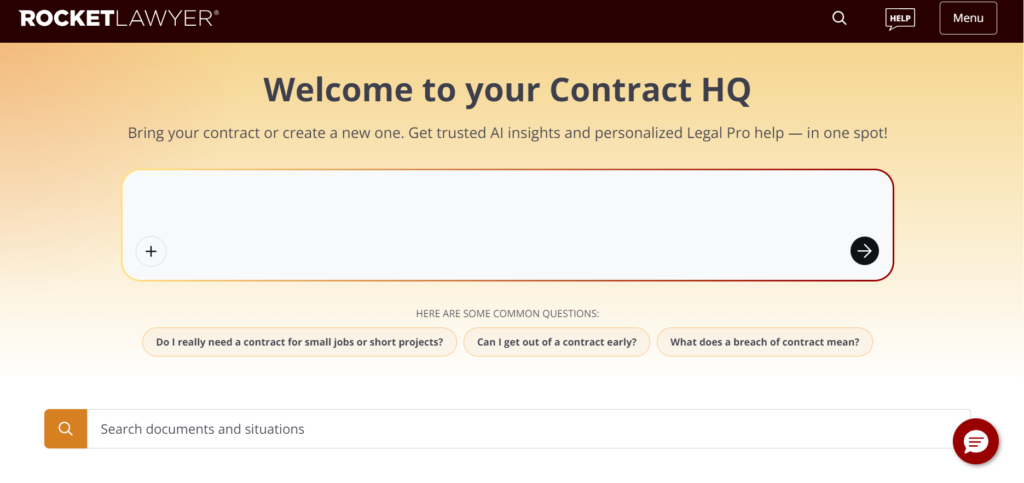
Rocket Lawyer: Attorney Review with AI Drafting
Rocket Lawyer combines AI document generation with access to licensed attorneys for review and consultation.
Key Features: The platform guides you through document creation with intelligent questioning. Once drafted, you can request attorney review for an additional fee. Lawyers verify compliance, suggest improvements, and answer legal questions via chat or phone.
Beyond drafting, Rocket Lawyer offers ongoing legal services: business formation, trademark registration, and dispute resolution support. The AI learns from your history to streamline repeat document creation.
Testing Results: A startup founder used Rocket Lawyer to draft founder agreements and IP assignment contracts. After AI generation, they purchased attorney review to ensure enforceability. The combined approach saved 70% compared to traditional law firm engagement while maintaining legal confidence.
Strengths:
- AI drafting plus human attorney review
- Broad legal service ecosystem
- Good for small businesses and entrepreneurs
- Clear pricing transparency
- Mobile app for on-the-go access
Limitations:
- Attorney review adds cost and time
- Less specialized for enterprise legal workflows
- Document library smaller than LawDepot
- Premium features require subscription
Pricing: Free: Basic document access. Premium: $39.99/month (unlimited documents, 50% off attorney services).
Official Site: https://www.rocketlawyer.com
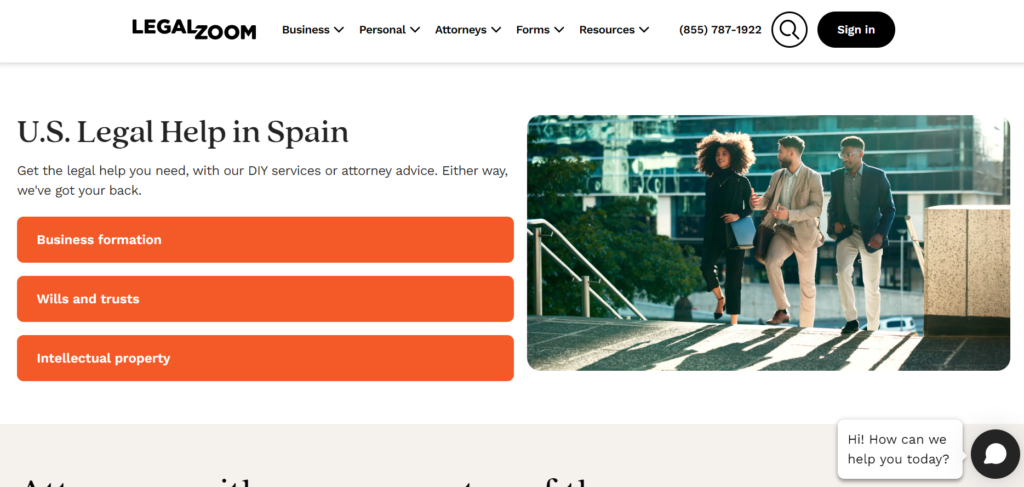
LegalZoom AI: Comprehensive Legal Services Platform
LegalZoom has evolved from a document filing service into an AI-enhanced legal platform serving individuals and businesses.
Capabilities: The AI assistant helps you identify which documents you need based on your situation. It then guides creation through adaptive questioning, ensuring all required elements are included.
LegalZoom also offers registered agent services, business formation, and ongoing compliance monitoring. The AI flags upcoming filing deadlines and regulatory changes that may affect your documents.
Use Case: An e-commerce seller used LegalZoom to generate terms of service, privacy policy, and vendor agreements. The AI ensured GDPR and CCPA compliance for their international customer base. The integrated approach reduced legal setup time from weeks to days.
Strengths:
- Comprehensive legal service suite
- Strong compliance monitoring
- Good for business formation and ongoing needs
- Trusted brand with extensive resources
- Attorney network for complex matters
Limitations:
- Higher price point than document-only platforms
- Interface can feel overwhelming with many options
- Less agile for rapid iteration on contracts
- AI features less prominent than human services
Pricing: Document plans start at $39.99. Business services vary by need.
Official Site: https://www.legalzoom.com
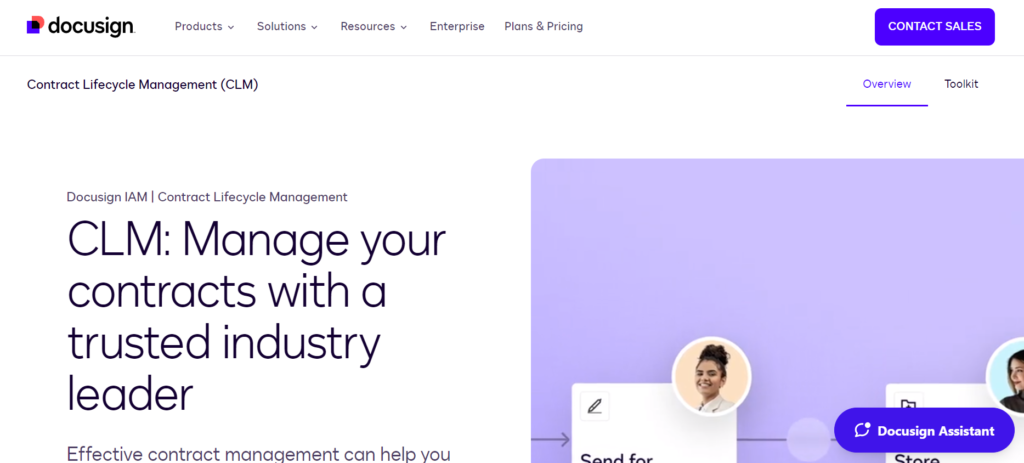
DocuSign CLM: Enterprise Contract Lifecycle Management
DocuSign Contract Lifecycle Management targets organizations that manage high volumes of agreements with complex approval workflows.
Enterprise Intelligence: The AI analyzes contract language across your organization to identify non-standard clauses, compliance gaps, and negotiation patterns. It suggests approved alternatives and automates routing for review and signature.
Integration with CRM, ERP, and procurement systems enables end-to-end contract automation—from initial request through execution and renewal.
Performance Reality: Large companies using DocuSign CLM report 50-70% reduction in contract cycle times. The AI catches risky language before signatures, reducing post-execution disputes. Audit trails simplify compliance reporting.
Strengths:
- Powerful enterprise-scale automation
- Deep system integrations
- Advanced analytics and risk detection
- Strong security and compliance certifications
- Scalable for global organizations
Limitations:
- Significant implementation effort
- Pricing not transparent (enterprise sales)
- Overkill for small teams or simple needs
- Requires dedicated admin resources
Pricing: Custom enterprise pricing. Typically starts around $10,000/year.
Official Site: https://www.docusign.com/products/contract-lifecycle-management
Ironclad: AI-Powered Negotiation and Workflow Automation
Ironclad focuses on streamlining contract negotiation and approval processes for legal and business teams.
Workflow Intelligence: The platform uses AI to route contracts to appropriate reviewers based on clause content, deal value, and risk profile. It suggests fallback language during negotiations and tracks commitment deadlines automatically.
The AI also extracts key terms from executed contracts into a searchable repository, enabling quick reference and renewal management.
Application Impact: A SaaS company used Ironclad to standardize customer agreements across sales teams. The AI ensured consistent terms, accelerated approvals, and reduced legal bottlenecks. Contract turnaround time dropped from 10 days to 2 days on average.
Strengths:
- Excellent negotiation support
- Smart workflow automation
- Strong repository and search capabilities
- Good for legal operations teams
- Regular feature innovation
Limitations:
- Primarily designed for in-house legal teams
- Learning curve for non-legal users
- Pricing requires sales engagement
- Less suitable for individuals or very small businesses
Pricing: Custom pricing based on team size and usage.
Official Site: https://ironcladapp.com

Selecting the Right AI legal document generators for Your Context
Not every platform serves every user. Selection depends on your document complexity, team size, and risk tolerance.
For Individuals and Freelancers: LawDepot or Rocket Lawyer Prioritize ease of use, affordability, and basic legal protection.
For Small Businesses: Rocket Lawyer or LegalZoom Balance document creation with ongoing legal support needs.
For Growing Companies: Juro or Ironclad Focus on collaboration, workflow automation, and scalable templates.
For Enterprises: DocuSign CLM or Ironclad Emphasize integration, compliance, and high-volume automation.
Evaluation Checklist:
- Does the platform cover your required document types?
- Does it adapt to your jurisdiction and industry?
- Can you integrate with existing tools (CRM, e-signature)?
- Does pricing align with your usage frequency and team size?
- Does it offer attorney review or escalation paths for complex matters?
Test platforms with a real document need before committing. Measure time saved, confidence gained, and risk reduced.
Validation Steps Before Signing Any AI-Generated Document
Automation accelerates drafting. Human judgment ensures protection. Follow this framework before executing any AI-generated agreement.
1. Verify Jurisdictional Compliance Confirm that clauses align with local, state, and national laws. When in doubt, consult a licensed attorney in your jurisdiction.
2. Review for Ambiguity Read the document as the other party might. Vague language creates disputes. Clarify obligations, timelines, and remedies explicitly.
3. Check for Missing Elements Ensure all essential components are present: parties, consideration, term, termination, dispute resolution, and governing law.
4. Assess Risk Allocation Evaluate whether liability caps, indemnification, and insurance requirements fairly balance risk between parties.
5. Confirm Execution Formalities Verify signature requirements, witness needs, and notarization rules for your document type and jurisdiction.
Key Principle: AI generates drafts. Humans validate enforceability. Never skip review for high-stakes agreements.
Common Errors That Compromise Legal Protection
Even sophisticated platforms produce flawed results when misused. Avoid these critical mistakes.
1. Skipping Attorney Review for Complex Matters AI handles routine documents well. Mergers, intellectual property transfers, and regulatory filings require expert counsel.
2. Ignoring Jurisdictional Nuances Laws vary by location. Ensure the platform accounts for your specific jurisdiction, not just generic templates.
3. Over-Customizing Without Understanding Modifying AI-suggested language without legal knowledge can create unintended loopholes. When editing, understand the implication.
4. Failing to Update Documents Laws change. Business relationships evolve. Review and refresh agreements annually or when circumstances shift.
5. Neglecting Execution Formalities A perfectly drafted contract is unenforceable if signed incorrectly. Follow signature, witness, and delivery requirements precisely.
Frequently Asked Questions
Are AI-generated legal documents legally binding?
Yes, if they contain essential contract elements and are properly executed. The creation method does not determine enforceability. However, complex or high-value agreements benefit from attorney review to ensure compliance and clarity.
Can AI legal document generators replace lawyers?
No. They automate routine drafting and reduce costs for standard agreements. Complex transactions, litigation, regulatory strategy, and novel legal issues still require qualified attorney expertise. Use AI for efficiency. Use lawyers for judgment.
How do these platforms handle data privacy?
Reputable providers encrypt documents in transit and at rest, comply with data protection regulations, and provide clear privacy policies. Review terms carefully, especially for sensitive or confidential agreements.
What if I need a document type not listed?
Most platforms allow custom template creation or accept requests for new document types. For highly specialized needs, consider hiring an attorney to draft a custom template you can reuse.
Do AI legal document generators work internationally?
Coverage varies. Leading platforms support multiple jurisdictions, but accuracy depends on local legal database quality. Verify support for your country before relying on the tool for cross-border agreements.
How accurate is the legal language generated by AI?
Platforms train on vetted legal sources and employ attorney reviewers, achieving high accuracy for standard documents. However, legal interpretation involves nuance. Always review generated language for alignment with your specific intentions.
Can I edit AI-generated documents?
Yes. All platforms allow customization after generation. However, understand that modifications may affect enforceability. When making significant changes, consider attorney review.
What about electronic signatures?
Most AI legal document generators integrate with e-signature platforms like DocuSign or Adobe Sign. Ensure your chosen method complies with applicable e-signature laws (ESIGN Act, eIDAS, etc.).